An institutional badge has to identify the wearer, reproduce the institution’s identity accurately and survive daily handling, cleaning and movement. By the end, you will know how to prepare the artwork, select a badge construction and fastening, approve a life-size proof and compare supplier quotations without overlooking safety or replacement costs.
Key takeaways
- Set the crest, wordmark and department hierarchy before requesting a quote.
- Choose badge material and fastening around uniform use and cleaning routines.
- Approve a physical sample for colour, legibility and variable names.
- Compare suppliers by specification, proofing and replacement terms, not piece price.
Prepare the institution logo and identity hierarchy before requesting a quote
A badge should identify the wearer before it advertises the institution.
For custom badges for institutions in Bengaluru, provide the institution name, wearer’s name, role or department and logo as separate artwork and text fields, then specify the order of importance: wearer’s name first, role or department second, and crest or logo at a supporting size.
A dominant emblem can turn an identification badge into a branding plate.
1. Supply the logo in AI, EPS, SVG or press-ready PDF format when available. JPEG and PNG files are raster images; a file that looks sharp on a website can produce pixelation, jagged edges or inaccurate outlines when enlarged for cutting, moulding or screen preparation.
2. Ask for the logo’s clear-space rule and minimum reproduction size. At final badge size, check the supplier’s minimum line thickness, enclosed letter counters and narrow gaps; plating, paint or resin can close them. Simplify the artwork rather than merely scaling it down, and confirm the minimum text size in millimetres.
3. For badges with logo in Bengaluru using English and Kannada, test both scripts at life size. Use a two-line hierarchy, a larger badge or shortened department names instead of shrinking everything into an unreadable standard blank. Approve a physical, life-size print or sample; never judge legibility from a full-screen PDF.
If only a low-resolution file exists, ask whether the supplier provides a logo redraw and whether you will approve that vector version before production.
Match the badge format and material to the crest, wear pattern and maintenance routine
A detailed school crest or college emblem suits a printed or PVC badge because gradients, fine colour changes and small lettering reproduce more clearly.
Hospitals and associations often need the same flexibility for identity marks and department names; die-struck or etched metal requires simplified artwork because hairlines, enclosed letter counters and narrow gaps can fill with plating or paint.
| Format | Best use | Main limitation |
|---|---|---|
| Printed or UV-printed | Detailed, multicolour logos and gradients | Surface can scratch without a protective layer |
| PVC | Flexible, colourful crests and raised shapes | Less formal appearance than metal |
| Soft enamel | Bold logo areas with recessed colour | Uneven surface and limited fine detail |
| Hard enamel | Smooth, durable institutional badge | Fine detail and tiny text remain difficult |
| Die-struck or etched metal | Simple shields, borders and single-colour emblems | Needs simplified artwork |
| Laser-engraved | Names, serials and restrained monochrome marks | Does not reproduce gradients |
| Magnetic or acrylic-window name badge | Changeable names and roles | Magnets need MRI-area controls; inserts need sealing |
| Embroidered | Uniforms, bags and large fabric emblems | Poor for tiny text and sharp detail |
| Metal pin badge | Permanent crests and secure attachment | Pin holes can damage fabric |
For custom badges in Bengaluru, specify stainless steel, anodised aluminium, or another named base metal and finish—not merely “metal badge.” Untreated mild steel and low-quality plated alloys can tarnish under monsoon moisture, perspiration and frequent cleaning; sealed acrylic or PVC avoids corrosion but may look less premium.
Compare weight, washability, edge comfort and resistance to disinfectant before choosing.
Choose dimensions, finish and fastening for uniforms, bags and daily movement
A practical horizontal name badge is about 25–35 mm high by 70–90 mm wide. Reserve space for the logo, border, fastening holes and bleed before setting the wearer’s name; these details can remove much of the usable text area. Approve a life-size proof, not a full-screen PDF.
Rounded rectangles suit uniforms and bags, while circles suit crests and house emblems. Shields reinforce institutional identity but waste space around text; a custom silhouette is distinctive yet harder to align and replace. Specify rounded corners, deburred edges, measured thickness in millimetres, and plating such as nickel or gold.
Choose matte for glare-free reading or gloss for stronger colour, then request a pull check on the badge and fitting.
| Attachment | Best use | Main caution |
|---|---|---|
| Butterfly clasp | Blazers, uniforms and firm fabric | Secure, but punctures fabric and can create a sharp hazard if bent |
| Safety pin | Event clothing and temporary issue | Holds well but damages fabric and can snag |
| Magnetic back | Uniforms and reusable name badges | Keep out of MRI-controlled areas; loose magnets and parts need safety review |
| Clip | Lanyards, bags and event clothing | Can slip on thin or moving fabric |
| Combined pin and clip | Mixed institutional use | More secure, but adds weight and detachable parts |
For custom badges for institutions in Bengaluru, identify MRI rooms and other restricted zones before ordering magnetic backs. Schools must check every clasp, magnet and decorative emblem for loose small parts; a pull test should include rough handling by children.
Approve colour, legibility and variable-name production before the full run
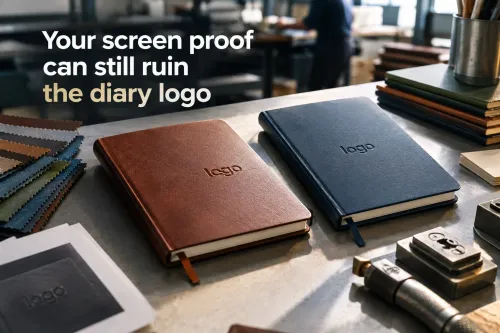
Approve a digital proof before production, then request a physical or accurately colour-managed pre-production proof for defined brand colours or a complex crest. A screen conversion is not a colour standard: CMYK, sublimation, UV ink, enamel and anodised metal use different colour ranges and surfaces.
| Method | Colour behaviour | Approval risk |
|---|---|---|
| CMYK printing | Builds colour from process inks | Reds, blues and dark greens can shift |
| Sublimation | Transfers dye into coated polyester or metal | Heat and substrate alter saturation |
| UV ink | Cures ink on the surface | Gloss and opacity change perceived colour |
| Enamel | Fills recessed metal areas | Opaque fills cannot reproduce every gradient |
| Anodised metal | Colours the oxide layer | Metallic background affects hue and contrast |
For badges with logo in Bengaluru, approve red, blue and dark-green references beside the proof, not from memory. Test the badge at actual size, including white text on glossy dark surfaces, condensed capitals and bilingual English-Kannada text.
Use WCAG’s 4.5:1 contrast ratio as a conservative check; it guides digital text and is not a physical-badge rule.
- Use engraving or laser marking for durable individual names on metal.
- Use digital printing for changing names, varied titles or detailed artwork.
- Use screen printing, enamel or a die when the logo and title are identical across the run.
- Choose a replaceable insert only when frequent staff changes justify its lower durability.
A paper insert behind acrylic is vulnerable to sweat, condensation, edge ingress and abrasion. For custom badges in Bengaluru exposed to daily wear, approve a sealed face, engraved plate or coated metal insert instead. Confirm the name list against the final proof before authorising production.
Compare an institution badges supplier by specification, not by piece price
A low piece price is meaningless if the quotation leaves materials, names and replacements undefined. Ask the institution badges supplier to state these items in both the quotation and production agreement:
- Decoration method, base material, dimensions, thickness and finish
- Attachment type, rounded and deburred edges, and pull-test method
- Artwork redraw fee, colour-matching method, proofing stage and acceptable tolerance
- Packaging, delivery split, variable-name handling, unused blanks and replacement policy
| Specification | Question to ask | Why it matters |
|---|---|---|
| Stainless steel, anodised aluminium, sealed acrylic or coated finish | Which construction resists Bengaluru humidity, perspiration and cleaning? | “Metal” does not prove corrosion resistance. |
| Variable names | Will engraving, laser marking, digital print or inserts match each approved name to the correct record? | A data-check and replacement process prevents misspelled or mismatched badges. |
| Attachment | Are magnets excluded from MRI-controlled areas, and have pins or clips passed a pull check? | Magnets create safety restrictions; loose pins can damage fabric or become sharps. |
| Proof and tolerance | Will you approve a life-size proof, and what variation in colour, position and dimensions is acceptable? | Small text and alignment errors become obvious on finished badges. |
A die-made badge can add mould or die tooling to a small first run. Later name changes then require new tooling or a different process, so compare that cost with digital production for individually named badges.
Ask how unused blanks are counted, labelled and stored, and whether replacements match the original finish. DRVY ENTERPRISES BLR can discuss logo redraws, proofs, materials, fittings and institutional batch requirements; compare its written specification with other quotations.
Related product
 | Customised Badge Manufacturer in Bangalore, DRVY At DRVY, we specialise in creating customised badges for various businesses, organisations, events, institutions,... View product → |
Frequently asked questions
What logo information should an institution prepare before requesting a badge quote?
Prepare the approved crest, wordmark, colours, department names and identity hierarchy. Tell the supplier which element must remain most prominent and provide a vector logo file when available.
How should an institution choose a badge format and material?
Match the format and material to the crest shape, how the badge will be worn and how uniforms are cleaned. Consider embroidered, woven, metal, acrylic or printed formats against durability and maintenance needs.
What badge dimensions and fastening work for uniforms and bags?
Choose dimensions that keep the logo legible without interfering with movement. Select pins, magnetic backs, clips, adhesive or sew-on construction according to the garment, bag fabric and daily use.
What should an institution approve before placing a full badge order?
Approve colour, logo legibility, finish, dimensions and a sample showing variable names. Check names, spelling and alignment before authorising the full production run.
How should you compare an institution badges supplier in Bengaluru?
Compare the written specification, material, fastening, artwork proof, sample process, variable-name handling, lead time and replacement terms instead of comparing piece price alone.
Keywords