A jute bag that looks sound in a showroom can fail at the handle, side seam or base once it carries bottles, books or boxed gifts. You will learn how Bengaluru’s humidity, storage and transport conditions expose those weaknesses, how to test a production batch, and which construction details to put into a purchase specification.
Key takeaways
- Inspect handle, side-seam and base reinforcement before approval.
- Store jute bags dry and off the floor during humid periods.
- Test the printed sample with the intended contents inside.
- Specify load, stitching, delivery date and packaging in the purchase order.
The tear usually starts at the handle, seam or base
Most corporate jute bags tearing before events in Bengaluru fail at the handle attachment, side seam or bottom-fold seam, not through the flat panel. These points carry concentrated load when contents shift during lifting, carrying and setting down, so insufficient seam allowance, low stitch density, skipped stitches or missing reinforcement quickly become tear paths.
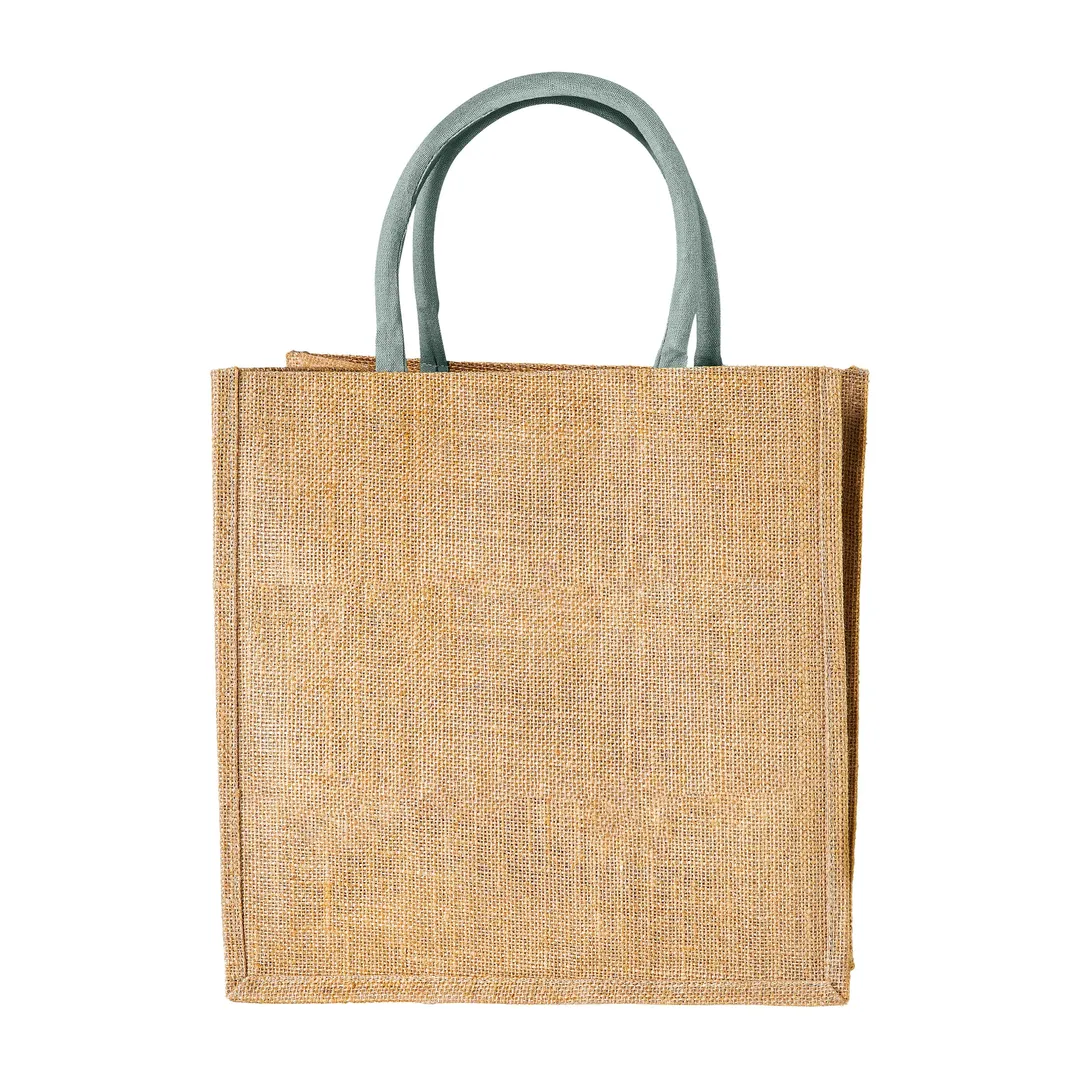
A narrow handle fixed with a small rectangular stitch pattern can peel out under a filled load. A lightly sewn base panel can split when bottles or boxed gifts slide against the bottom fold. Loose weave, fraying edges and weak plied yarn make both failures worse.
Check these construction details before approving a sample:
- A seam allowance too narrow to hold the stitch line securely
- Sparse stitching, skipped stitches or visible gaps
- Loose weave, frayed cut edges or irregular yarns
- Weak plied yarn that separates under finger tension
- No reinforcement patch or bartack at handle attachments
- Narrow handles joined with a small rectangle instead of a longer load-spreading pattern
- A lightly sewn bottom panel or fold with no strengthened corners
Low fabric weight and poor weave tightness are different defects. A low-GSM fabric has less material; a loose weave has larger, less secure openings, even if the fabric feels substantial. The word “jute” says little about tear resistance without fabric weight, weave, yarn quality and reinforcement.
These are common jute bag durability problems in Bengaluru, not merely printing faults.
Humidity, damp storage and wet transport weaken bags before use
A bag can leave the factory sound and arrive event-ready only in appearance. Jute is a hygroscopic cellulosic fibre: it absorbs and releases atmospheric moisture. During Bengaluru’s monsoon humidity, repeated humidification and drying cause fibre swelling, surface fuzzing, distortion and weakened yarns or seams.
These jute bag durability problems in Bengaluru often begin in storage, before anyone fills or lifts the bag.
1. Check cartons stored in sealed rooms, sealed plastic, against damp walls, directly on floors or in poorly ventilated spaces. Trapped moisture encourages mildew and odour, while contact with a wet wall or floor can weaken the lower panels and seams.
2. Inspect cartons exposed to warehouse heat for weeks. Heat drives drying after humidification, creating repeated expansion and contraction; compressed carton packing adds permanent fold pressure and weakens crease lines.
3. Check wet transport damage before unpacking the full order. Rainwater, condensation or a damp vehicle can soften the jute, and heavy cartons pressing on wet bags can distort panels and crush the base.
4. Release corporate jute bags in Bengaluru only after inspecting every sample for mould spots, damp smell, permanent creases, surface fuzzing, swollen or distorted panels and loose seams. Rub a hidden area lightly and compare its texture with an unaffected sample; a bag that looks dry can still have moisture-damaged fibres.
A nominal size does not tell you the safe carrying weight
A 14 by 16 inch bag has no defined safe carrying weight. Specify the contents and target filled load instead. Bottles, food containers and boxed gifts create impact and concentrated point loads at the base; brochures and clothing spread weight across the bag and are far less demanding.
| Contents | Suitable construction | Failure risk |
|---|---|---|
| Brochures or clothing | Lighter fabric, standard lining, sewn handles | Over-specifying capacity wastes material |
| Bottles or food containers | Higher GSM or equivalent tight weave, base gusset, reinforced seams | Bottom-fold seams and corners take impact |
| Boxed gifts | Lined construction, wide handles, boxed corners, strong base panel | Contents shift and pull handles and side seams |
For jute bags for business events, put these requirements in the purchase specification:
- Fabric GSM or an equivalent construction requirement, plus weave-tightness acceptance
- Lining, or laminated versus unlaminated jute
- Handle material and width, reinforcement-patch dimensions, and bartack or box-X stitching
- Closed seams with adequate seam allowance, defined stitch density, boxed corners and a base gusset
Lamination improves resistance to brief rain or spills, but it does not seal seams or make the bag waterproof. Polypropylene or PVC film can crease, crack or delaminate, so inspect folds, seams and handle patches.
When comparing corporate jute bags in Bengaluru, reject “premium jute” as a capacity specification. Require a filled-load test because a smaller, heavily reinforced bag can safely outperform a larger bag with light fabric and narrow handles.
Approve the printed sample with a filled-bag load test
A single lift proves little: corporate jute bags tearing before events in Bengaluru often fail during repeated handling. Approve a final printed, finished sample only after this acceptance process:
1. Sample bags from every production lot, not just one showroom bag. Fill each with the actual event contents or a representative load, including bottles, food containers or boxed gifts. Record the target filled load in kilograms.
2. Lift each bag by its handles, set it down, and repeat the agreed handling cycle. Then suspend it for the hold period specified with the supplier. Put the test load, repetition count and hold time in the purchase document.
3. Inspect every tested bag for handle pull-out, damaged reinforcement patches, side-seam or bottom-seam opening, base-panel separation and stitch gaps. Check dimensions against the approved sample, including width, height and gusset depth.
4. Examine print adhesion after handling. Reject ink that flakes, lifts or cracks. Check for solvent odour, damp smell and visible mould; trapped moisture and heavy ink coverage can stiffen cloth, while curing heat can damage a laminate.
5. Define acceptable defects in writing, such as zero handle pull-outs, open seams, mould or print failure. Do not invent a universal carrying capacity: jute bags for business events need a load and test method matched to their contents.
Approve artwork on this final sample, not an unprinted swatch. Ink coverage, curing heat and trapped moisture can change the cloth or laminate before distribution.
Build delivery time and measurable requirements into the supplier decision
Choose a branded jute bag supplier by measurable construction, not the phrase “premium jute.” Brief the supplier against this checklist before approving artwork or quantity.
- Fabric: state jute composition, GSM or equivalent construction, tight even weave, and yarn quality; specify handle material and width.
- Construction: state attachment method, reinforcement-patch dimensions, seam allowance, stitch density, box-X or bartack stitching, lining or lamination, and base-gusset dimensions.
- Performance: record the target filled load and the test method, including repetitions, handling cycle and suspension hold time.
- Finish and logistics: approve the final print process and cured artwork, then specify packaging, lot identification and acceptable-defect limits for skipped stitches, fraying, mould, odour, print failure and handle pull-out.
| Requirement | Supplier evidence |
|---|---|
| Fabric and weave | Composition, GSM, yarn, and a close inspection of weave tightness |
| Handles and seams | Width, material, attachment, reinforcement size, seam allowance and stitch density |
| Load test | Filled target weight, lift-and-set-down repetitions and hold period |
| Packing and storage | Dry cartons kept off floors and away from walls in ventilated storage |
| Lot control | Lot number on cartons, sample records and written defect limits |
Schedule an approval lot early enough to fill-test it and replace failures. Receiving the complete order immediately before an event removes that remedy: there is no production, transport or inspection window left.
When comparing corporate jute bags in Bengaluru, ask manufacturers such as DRVY ENTERPRISES BLR to document these points rather than accepting a fabric swatch and a delivery promise.
Related products
 | Custom Jute Bags Manufacturer in Bangalore, DRVY At DRVY, we produce custom jute bags that blend the natural charm of jute with practicality for businesses, brands,... View product → |
 | Custom Jute Bags ₹115 Natural color fabric with webbing handle,with multicolor printing on both the sides. View product → |
Frequently asked questions
Where do corporate jute bags usually tear first?
Tears usually start at the handle attachment, side seam or bottom-fold seam because these areas carry concentrated loads. Check seam allowance, stitch density, skipped stitches and reinforcement.
How do humidity and damp storage cause jute bag durability problems in Bengaluru?
Damp storage and wet transport weaken jute fibres and seams before use. Keep bags dry, off the floor and protected from rain during storage and delivery.
Does a jute bag’s nominal size show how much it can carry?
No. Size describes capacity, not safe carrying weight. Confirm the safe load with a filled-bag test that matches the event contents and lifting conditions.
How should you approve corporate jute bags for a business event?
Approve the printed sample only after a filled-bag load test. Put the tested load, handle construction, stitching requirements, delivery date and packaging conditions in the purchase order.
Keywords